
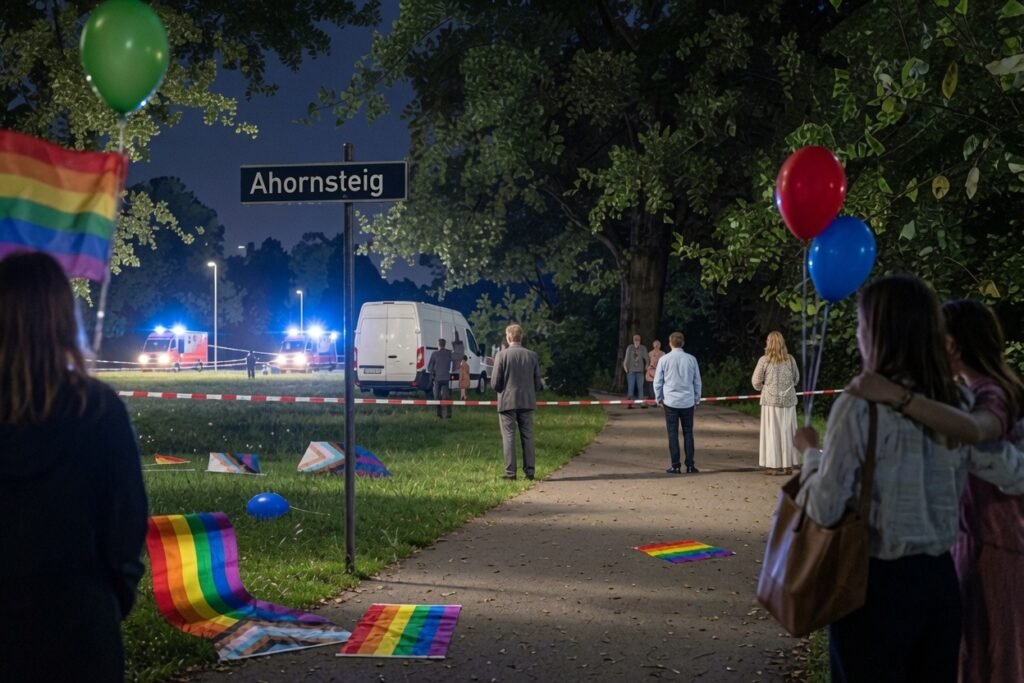
The Berlin Pride attack was an Islamist extremist act of violence, but the way it was framed in U.S. commentary outlets like The Free Press differs significantly from the factual, verification driven reporting of German media.
German authorities identified the attack as Islamist terrorism within hours, and in that sense The Free Press is right to highlight the role of extremist ideology. At the same time, its coverage tends to narrow the story to “ideology alone,” largely through a U.S. culture war lens. A fuller picture includes failures in deradicalization efforts, judicial decisions that allowed a known extremist to re enter society, and the broader pattern of anti LGBTQ+ violence shared by multiple extremist movements — not just Islamist ones. By focusing almost exclusively on ideology, The Free Press risks turning a complex European security and social issue into another chapter in America’s domestic political narrative, as seen in the video link below.
/https://youtube.com/shorts/j_7Xd_BtBNE?si=6DksYsLIow-i61fC
The First False Narrative
The video from The Free Press accurately reports the core facts of the Berlin Pride attack — details confirmed by German authorities and multiple independent newsrooms. However, its title, “The Ideology Responsable for the Berlin Attack” and “The Wrong Kind of Terrorist,” and the framing used throughout the segment introduce a misleading narrative. The question posed in the video, “Why are people in Europe scared to call out the attacker for what he was?”, does not reflect what actually happened in Germany.
In reality, German officials identified the attacker’s Islamist extremist background within hours, and major German outlets reported this promptly and directly. There was no hesitation or reluctance to acknowledge the ideological motive.
The framing used by The Free Press is shaped by ongoing culture war dynamics in the United States, where political debates often center on identity, ideology, and a perceived institutional reluctance to name certain forms of extremism. Applying that lens to Europe creates a distorted impression — suggesting hesitation or denial where none occurred. German reporting on the Berlin attack was factual, cautious, and verification driven, not evasive. The discrepancy lies not in the facts themselves, but in the narrative overlay imported from American political discourse and the politics of fear.
The Second False Narrative
A second distortion arises from how Nyya’s remarks at the Brandenburg Gate memorial were amplified in U.S. commentary. In the viral clip, the singer said she initially hoped the attacker would be “a white Christian” rather than someone with a migrant background — using a racial slur in the process. German outlets reported her comment factually but treated it as a personal misstep, not a representative sentiment. It was widely criticized in Germany for politicizing a moment meant for mourning.
Yet in U.S. commentary spaces, including The Free Press, her remark was elevated into a symbol of European denial or ideological confusion. This framing again reflects American culture war dynamics more than the actual German response, where officials, journalists, and LGBTQ+ organizations addressed the attack directly, without hesitation or euphemism.
Comparison Table: Real Press vs. The Free Press
| Aspect | The Free Press (U.S.) | German & International Outlets |
|---|---|---|
| Primary Lens | Ideological, culture‑war framing | Verification‑first, procedural |
| Focus | Political reluctance, symbolic narratives | Timeline, suspect background, public safety |
| Treatment of Nyya’s remark | Elevated as culturally significant | Reported briefly, not central |
| Motive Reporting | Highlights Islamist ideology early | Waits for official confirmation, then reports |
| Tone | Critical, provocative | Cautious, factual, community‑centered |
| Audience Assumption | Readers familiar with U.S. debates | German public expecting verified information |
Side‑by‑Side Comparison of Media Narratives
| Outlet / Lens | Main Focus of Explanation | View of LGBTQ+ Targeting | Role of Systems & Policy | Political Framing Style |
|---|---|---|---|---|
| The Free Press | Islamist ideology as primary cause | Emphasizes Islamist hostility to Pride/LGBTQ+ | Limited attention to deradicalization, courts, etc. | Often framed through U.S. culture‑war narratives |
| Mainstream German / EU | Mix of ideology, security failures, and policy gaps | Sees LGBTQ+ spaces as recurring extremist targets | Highlights surveillance gaps, judicial choices, prevention failures | Framed as European security and social policy issue |
| Human‑rights / LGBTQ+ orgs | Structural vulnerability of gay communities | Stresses long history of anti‑LGBTQ+ violence across ideologies | Focus on protection, hate‑crime laws, community resilience | Framed as rights, dignity, and safety, not partisan war |
A Balanced Critique
The way we talk about the Berlin Pride attack matters — not only for LGBTQ+ communities, but for how we understand violence, responsibility, and prevention. Some outlets, like The Free Press, emphasize Islamist ideology as the central cause, and there is truth in that: the attacker had a documented history of radicalization and contact with extremist networks. Yet if we stop there, we miss the wider web of accountability.
European reporting and analysis point to gaps in deradicalization programs, court decisions that released a high risk individual, and ongoing challenges in monitoring online extremist spaces. They also highlight that gay communities are targeted by multiple forms of extremism, including far right movements, which share similar hostility toward Pride and LGBTQ+ visibility.
A fair and balanced view acknowledges the ideological motivation without turning it into a single, convenient villain; it asks harder questions about systems, policies, and social climates that allowed this attack to happen — and about how we protect vulnerable communities without weaponizing their suffering for partisan battles.
Closing Reflection
In moments like these, when violence strikes at the heart of a community already carrying so much, our first responsibility is not to win an argument but to hold space for truth, grief, and one another. The Berlin Pride attack reminds us that ideology can wound, systems can fail, and narratives can distort — but people remain at the center of every story. A woman lost her life. Dozens were injured. A community was shaken. These realities deserve more than political simplification or cultural projection.
As we reflect on what happened, we are invited to resist the temptation to collapse complexity into convenience. Naming the ideological motive matters. Examining systemic failures matters. Protecting gay lives matters. But so does the way we speak about these things — with care, with humility, and with a commitment to seeing the full picture rather than the most comfortable one.
Our calling, especially in community, is to respond to violence without becoming violent in our language; to confront extremism without dehumanizing; to seek accountability without surrendering to fear. We honor the victims best when we refuse to let their suffering become fuel for someone else’s culture war. Instead, we hold their memory by working toward a world where gay people can gather, celebrate, and live without being targeted — and where our public conversations reflect compassion rather than division.
May we continue to be people who tell the truth, who protect the vulnerable, and who refuse to let grief be weaponized. And may our shared commitment to dignity, safety, and solidarity be stronger than any ideology that seeks to harm.